
Choose from a range of fun and engaging, curriculum-relevant, hands-on science workshops to engage and inspire your pupils – use as a hook to introduce a topic, as a review part way through or as a stand alone activity. Whatever works for you, your school and your children. Whole science days or individual workshops available – in person and online.

In-person workshops regularly delivered in Cambridgeshire / Norfolk / Suffolk / Essex / Hertfordshire / Bedfordshire. Nationwide and International bookings considered. Locations more than an hour’s drive from CB22 may incur a surcharge.
Virtual Visits
Virtual visits are also available. As well as an interactive, hands-on live online session, I can also provide planning and resources for follow up investigations. I will work with you to provide the best opportunities for your children.
Email me at DrJo@drjosciencesolutions.co.uk to find out more and discuss a flexible approach tailored to your school. I can provide resources, a live zoom virtual visit and follow up investigations.
Now taking bookings for academic year 2026/27.
In person workshops
Blood, hearts and circulation
Fits perfectly with the year 6 topic Animals including humans: Identify and name the main parts of the human circulatory system, and describe the main functions of the heart, blood vessels and blood; Recognise the impact of diet, exercise, drugs and lifestyle on the way their bodies function.
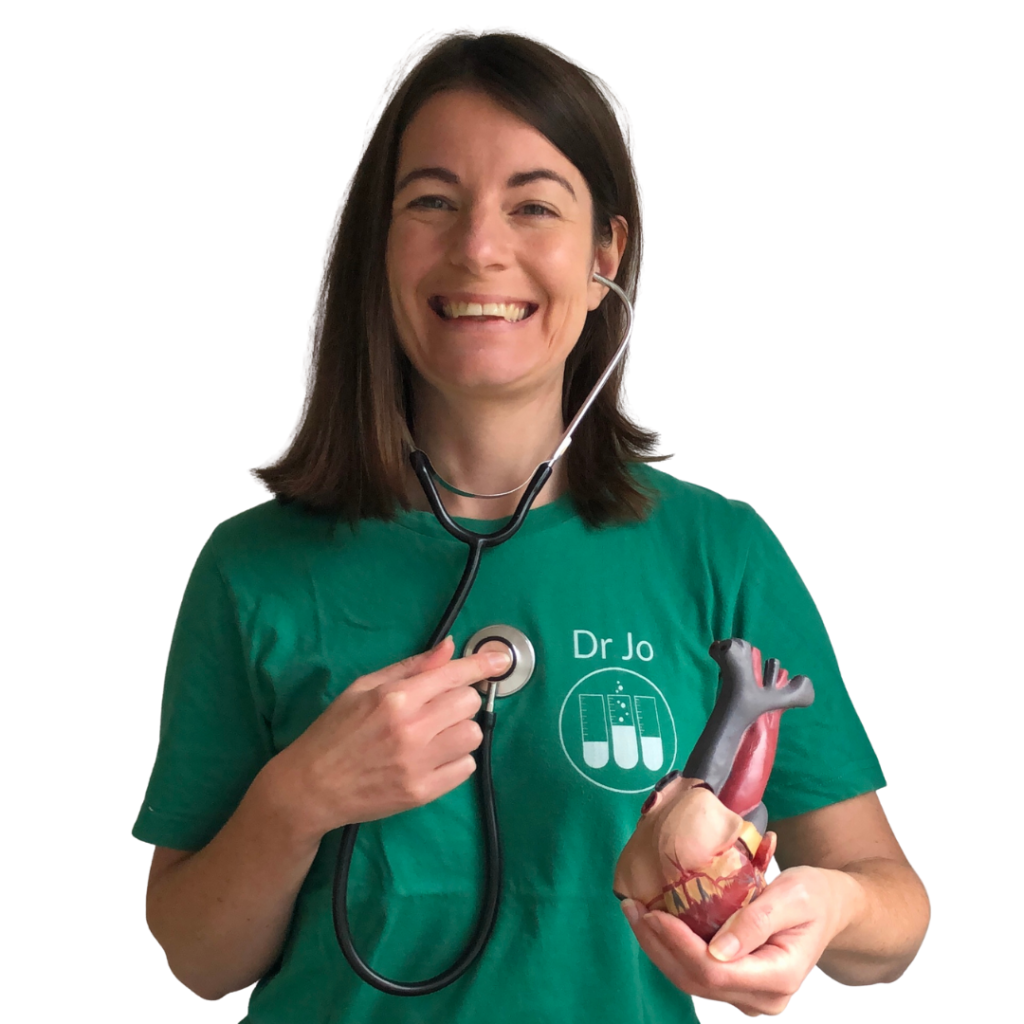
Using stethoscopes and real animal hearts to explore the circulatory system.


Changing states of matter – ice cream
Using the ever popular making ice cream in a bag to explore states of matter (solids and liquids), changing states (freezing and melting), reversible and irreversible changes and enjoying the fruits of our labour! Kitchen science at its finest. Allergies can be accommodated.
Fits into Year 1 Everyday materials; Year 2 Uses of everyday materials; Year 4 states of matter; Year 5 Properties and changes of materials curriculum topics, but also relevant for working scientifically and suitable for all year groups.


Plants, seed pods and pollination
Explore the parts of a plant, dissect a flower, identify trees and leaves, find out what plants need to grow and take a closer look at different types of seed and bulb. Discover how different plants use wind and insect pollination.
Year 1 Plants – identify and name a variety; identify and describe the basic structure; Year 2 Plants – seeds and bulbs; find out and describe what plants need to grow; Year 3 Plants – identify and describe functions of different parts of flowering plants; explore requirements for life; investigate water transport; explore the part that flowers play in the lifecycle of flowering plants; Year 5 Living Things and their Habitats – describe life processes in some plants; Year 6 Living Things and their habitats – classification; EYFS Understanding the World.


The senses
Choose from taste and smell (KS1 and KS2) or sight and hearing (KS2), or a carousel of activities exploring all 5 senses.
EYFS Understanding the world; Year 1 Animals including humans: identify, name, draw and label the basic parts of the human body and say which part of the body is associated with each sense; Year 3 Light; Year 4 Sound; Year 5 Changes as humans develop to old age; Year 6 Light.


Fizzing potions
A popular hands-on exploration of effervescence and chemical reactions: make sherbet and fizzy potions, watch raisins dance and create an exciting soda fountain! Suitable for all year groups (EYFS and KS1 will be a slightly different exploration of effervescence).
NEW! Fizzing Potions Part 2 – can be used to extend the workshop or as a second session. Continue your investigations with mini lava lamps and effervescent rockets, or pH testing and colour changing potions.
EYFS Understanding the world; Year 1 Everyday materials; Year 2 Uses of everyday materials; Year 4 states of matter; Year 5 Properties and changes of materials. EYFS Understanding the World.


Teddy Bears’ hospital
Popular with EYFS and KS1 1. Using stethoscopes to listen to our hearts, then give our teddies a check up, check their X-ray pictures and bandage them. Discussions about people who help us and what to do when we are feeling unwell.


EYFS Understanding the world; Year 1 Animals Including Humans, Parts of the body; Year 2 Animals Including Humans, Basic needs, importance of exercise and hygiene.
Brains, neurons and communication
Exploring the functions of different areas of the brain, neurons (nerve cells), communication, reflexes and reaction times in this hands-on workshop. Fits nicely alongside growth mindset teaching and year 6 looking at how our bodies function, but suitable for all KS2.


Laboratory skills
We bring some proper laboratory equipment to you so you can explore what real lab scientists do (KS2).
Choose from:
- Microscope workshop
Learn how to use a microscope, learn about and label the different parts and explore a range of slides to suit your topic or interests, including preparing your own slides!
- Pipetting workshop
Try your steady hand to have a go at accurate and speedy pipetting using pasteur pipettes (KS1) and micropipettes (KS2), using well plates, following coordinates or creating science art pictures.
- Measuring and diluting
Practising essential laboratory skills to ensure accurate measuring of volumes and dilutions of samples.
- Test pH
An exploration of the properties of acids and alkalis, testing ‘unknown’ samples using red cabbage indicator as well as universal indicator test strips to compare results and think like a scientist to evaluate results.
- DNA extraction
Find out about the discovery and structure of DNA and extract it from strawberries (or other fruit) using a standard laboratory technique.


Microorganisms and germs
An exploration of microorganisms, good and bad, hidden germs and the importance of hand washing.
Can be combined with microscope workshop and / or extended to include other investigation, such as preparing microscope slides to view live bacteria in yoghurt! (KS2).
Year 6 Living Things, the impact of lifestyle; Year 2 Animals including humans (importance of hygiene).


The Digestive system
Covers the year 4 topic Animals including humans: simple functions and basic parts of the digestive system; different types of teeth in humans and their simple functions. Follow your food through the digestive system, finding out what happens at each stage in a very hands-on, slightly messy, exploration! This workshop is best as a double slot taking 1.5-2 hours for the full experience and can also be combined with the teeth or poo workshops!.
Also Year 2 – Living Things and their habitats: how animals obtain their food and how they are adapted to different habitats; basic needs. Animals including humans: Basic needs; importance of different types and amounts of food.
Year 6 – Animals including humans: recognise the impact of diet; building on learning from years 3 and 4 about the body. Evolution and inheritance: identify how animals are adapted to suit their environment.


Teeth
Exploring different types of teeth and their functions, modelling different types of teeth, looking at teeth of other animals and how this is related to their diet.
Can be combined with making and testing toothpaste workshop.

Poo workshops!
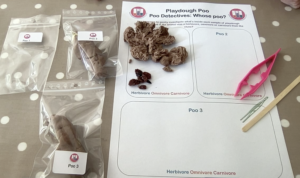
Playdough Poo detectives
Explore models of poo for herbivores, carnivores and omnivores, discover what animals might have eaten from their (pretend) poo, and learn about how shape can also provide clues about whose poo it is!
The science of Poo
Make an edible poo model and learn about normal stools, constipation and diarrhoea!


Chromatography
Colourful Chromatography! Explore what happens when we try to un-mix colours! Using pens and sweets we will investigate which colours have been mixed together; when, where and why colours are used; solubility and particle theory (!); and develop some key lab skills along the way. Popular with KS1 and KS2: suitable for all.
Can also be delivered as part of a crime scene investigation.


Evolution and Adaptations
Investigate how animals and plants are adapted to their environments, learn about the work of Charles Darwin and recognise that living things have changed over time. Explore the story of peppered moths during the industrial revolution and create your own pretend dog and see how well it survives in a pretend world of changing environmental conditions.
Can be combined with DNA extraction (laboratory skills) for an extended double workshop.
Year 6 Evolution and Inheritance.


Incredible Edible Cell
Find out the differences between plant and animal cells, discover some specialised cells and make an edible model! Upper KS2 and KS3.


Habitats and nature
Sessions can be tailored to different year groups and curriculum objectives and can include nature walks, plant identification and mini beast hunting in your schools grounds, subject to discussions and available area.
A typical session might include taking a closer look at camouflage and adaptations, habitats and mini den building, identifying and classifying plants and invertebrates and/or creating bird feeders.
EYFS Understanding the world; Year 1 Plants, Seasonal Changes; Year 2 Plants, Living Things and their Habitats; Year 3 Plants; Year 4 Living Things and their Habitats, Food chains; Year 5 Living Things and their Habitats; Year 6 Living Things and their Habitats, Evolution and Adaptations.


Owl pellet dissection
An exciting and engaging session exploring what owls have eaten!
Children will dissect an owl pellet in small groups*, discovering what owls eat, how they feed and digest their food. Using identification sheets, small bones will be identified.
Year 2 Living Things and their Habitats, Nutrition; Year 3 Animals Including Humans: Skeletons, Nutrition; Year 4 Living Things and their Habitats, Food chains, Animals Including Humans: Digestion; Year 5 Living Things and their Habitats; Year 6 Living Things and their Habitats.
*subject to availability of owl pellets. This workshop cannot be accommodated at short notice. One owl pellet per 4/5 children or additional owl pellets can be provided at additional cost.
***NEW*** Pollution, Polar Science and Climate Change
Hands-on investigations of environmental changes such as global warming, plastic pollution, microplastics and some polar science including huddling penguins, blubber gloves, melting ice and rising sea levels.
What is A Scientist? Assembly
An interactive look at what a scientist might look like and do, including a variety of STEM careers and raising science capital, along with some engaging activities to trick your brain. Great to include an entire keystage or whole school. 30/45/60 minute sessions available. Suitable for all ages.

Wonders Of The Human Body
An interactive tour through some of the wonders of the human body and brain – including sight, reaction times, senses and more. Suitable for all ages. Can be adapted as a classroom session or assembly for larger groups.
Surprising Science with a piece of paper!
Join Dr Jo to explore the wonder of paper and how it can help explain scientific phenomena: from chromatography and capillary action to static electricity, from shadow puppets to optical illusions, from engineering structures to maths problems.
With plenty of demonstrations requiring volunteers, mini investigations to do from the theatre seats, and ideas to take away, this will be an interactive, fun and exciting assembly show that will leave you enthusiastic and curious about the science we can discover through paper! Can be adapted as a classroom session or assembly for larger groups.
Pop-up ‘science museum’
A range of equipment and carousel activities for children to explore independently, with introductions, supervision and guidance from me for all activities. Ideal to involve the whole school to give everyone an experience in just one day – set up all day and children spend time in the ‘museum’ on a rolling programme.


Pop-up Museum: Brilliant Bodies
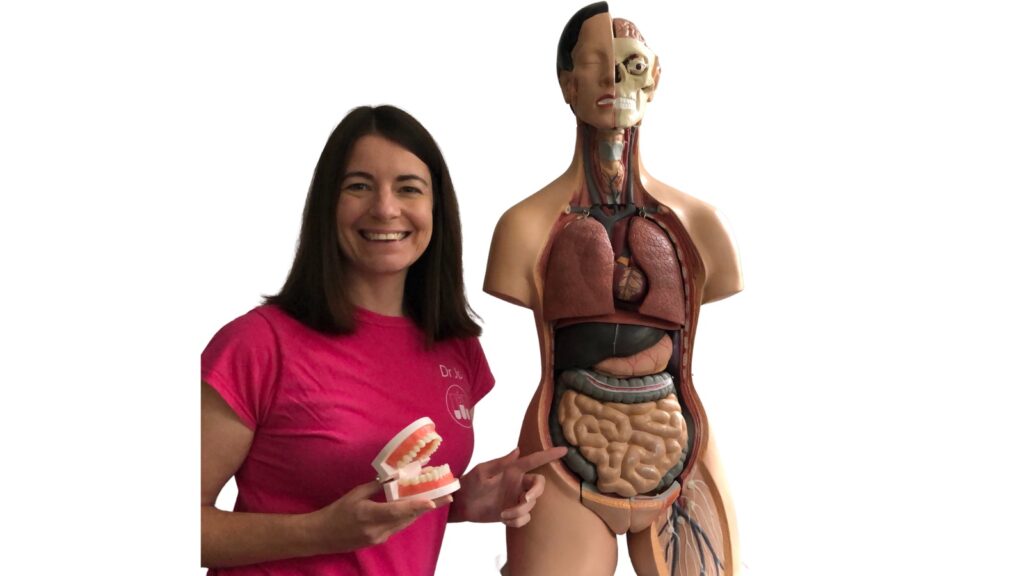
A range of carousel activities exploring how our bodies work – including life size anatomical torso, giant human body floor game, stethoscopes and more – for children to explore independently, with introductions, supervision and guidance from me for all activities. Ideal to involve the whole school to give everyone an experience in just one day – set up all day and children spend time in the ‘museum’ on a rolling programme.
NEW! Careers Q&A
Dr Jo has had various scientific roles as well as teaching. Find out about working with seals, fish, pigs, and sheep, animal behaviour, neuroscience, clinical trials and developing medicines, cutting edge research, genome sequencing, analysing data and more! With plenty of time for questions too. Suitable for all ages.

Any other topics?
Just get in touch to see what we can do – we can usually create something to fit with your needs.
(new prices from April 2023)
STEM Clubs
I also deliver STEM Clubs in the holidays, after school and for Home Education groups.There is also an online science club available.